
Laser Treatments
Laser Treatment
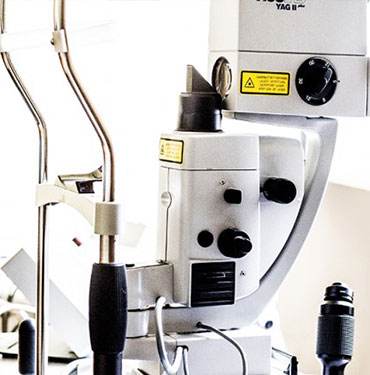
Laser therapy is one of the modern ophthalmological methods and can be used effectively for various diseases of the eye. The first light treatment was carried out in 1949 at the University Hospital Hamburg using focused sunlight; today it has evolved into so-called laser coagulation. In laser coagulation, e.g. with an argon laser, dye laser or YAG laser, heat is generated in a small, precisely defined area of the retina and used therapeutically.
for diabetes
Diabetes mellitus can cause damage to the eye. Elevated blood sugar levels alter, damage and block blood vessels. In the eye, oedema can form at the macula (macular oedema); changes in the retina are called diabetic retinopathy. In our practice we use a low-energy laser to carry out targeted treatment that distributes the limited available oxygen to the essential areas of the retina. The treatment is carried out on an outpatient basis under local anaesthesia of the cornea.
for retinal holes
Since the retina is not firmly attached to the back wall of the eye, holes in the retina can lead to retinal detachment. In our practice the edges of the hole are sealed to the underlying layer using the laser. After several days these scars are so impermeable that no more fluid can flow under the retina. This significantly reduces the risk of later retinal detachment.
for retinal haemorrhages after thrombosis
If an occlusion or thrombosis occurs in the retina of the eye, this can lead to loss of visual acuity or even blindness. Laser treatment seals leaking and newly formed vessels, thereby reducing bleeding and swelling of the retina.